Thursday, May 3, 2012

Stuck in Limbo

        As many seniors eagerly wait to hear back from their colleges of choice the hopeful outcome is either a fulfilling "Congratulations!" or a dreaded rejection. Instead, however, a number of students this year will have received a rather neutral message -- finding out they have been waitlisted. It isn't an outright no, but it surely isn't a yes either. So what does it mean? This response from colleges seems to be becoming more and more popular each year, and has left numerous high schools seniors in a sort of "limbo" stage in the admissions process.

     According to a Tribune article regarding the growth of college waitlists, the purpose of this separate group is due to the fact that, "It has become increasingly difficult for admissions officers to predict who actually will show up in the fall, so schools have countered with an insurance policy: a larger reserve pool to manage their enrollment". What is very interesting about this phenomenon is how rapidly it has grown in the last 10 years. The University of Chicago waitlist for example, according to the school newspaper The Chicago Maroon, grew from 500 names in 2003 to an astonishing 3,000 in 2012. Similarly, at Northwestern University in Evanston, Illinois the waitlist has grown by 1,300 names in the last six years. The biggest concern is not necessarily the rapid growth of these waitlists, but rather the false hope that some students get from them. 
     
      Bonnie Miller, Tribune reporter and author of the article, found that at Vanderbilt University only 9.4% of students on the waitlist were accepted this year, and that number has remained constant for several years now. Additionally, at Northwestern, according to school officials, only 21 out of 3,204 students were accepted from their waitlist in 2010, and none in 2011. These numbers paint a realistic picture of how many students actually get accepted from these "insurance" applicant pools.
      
        Even more interesting is the type of applicants that are placed on these waitlists. In an interview with James Conroy, head of the college counseling department at New Trier High School, I was told that "99% of the waitlist kids will be from New Trier type zip codes". This overwhelming number is due to the fact that when it comes time for the school to select students from the waitlist, they will not have a lot of money to give in financial aid. Therefore, they need students who will not require much financial assistance. An additional function of waitlists deals with schools wanting to satisfy big donors and legacies. They feel that by not outright denying an applicant, they are essentially easing the pain on the rejection yet to come.
What do you think of the waitlist system? Is it fair?


Thursday, April 12, 2012

The Legacy Faction

     "To those of you who received honors, awards, and distinctions, I say, 'Well done'. And to the C students, I say you too can be president of the United States"


    These were the words of former president of the United States, George W. Bush, at a 2001 commencement speech at Yale University in New Haven, Connecticut (the entire speech can be seen here). For those of you who did not understand his humor in the first place, President George W. Bush was admitted to Yale because of his legacy status and political connections. Once at Yale George W. Bush received less than stellar grades earning the title as a "C Student". I found it shocking that not only did he get into Yale because of legacy status and political connections, but once there the former president of the United States, he who made the decisions necessary to run our country, received unsatisfactory grades in college. He is not the only famous politician with this type of academic track record, in my Junior Theme book entitled The Price of Admission by Daniel Golden I discovered another shocking quote from Massachusetts senator John Kerry. According to Daniel Golden, John Kerry was also a Yale legacy and when asked by the Boston Globe about his four D's during freshman year Kerry responded, "I always told my dad that D stood for Distinction". I understand that excellent grades in college do not necessarily correspond with excellent political careers, but I find it disturbing that these work ethics are joked about by these politicians. 


   Politicians are only a small portion of those blessed by legacy status. Having large sums of money to donate and simply just being one of many family members also qualifies you as a legacy. What Golden tries to prove is that not only are too many slots in admissions being taken by these legacies, but that, "Legacy preference also provides affluent families with a form of insurance against a decline in educational status from one generation to the next". Golden emphasizes the idea of "Status" and how it is important for wealthy families to maintain that social rank by having their children go to the most prestigious universities. Another key idea Golden emphasizes is "insurance" and how the performance of these legacy students is not what's most important, but rather the fact that just by attending these prestigious universities they are gaining connections and reputation for the future.


    What is most important to note are the students that these legacy cases are replacing. Because highly selective colleges boast such tough standards, nearly all applicants have outstanding credentials, with the exception of a majority of the legacy cases. At The University Notre Dame in South Bend, Indiana nearly 1 out of every 4 students is a legacy. At a school where the acceptance rate is between 28-30 percent according to their website, that is a large number of slots set aside for legacies. Similarly, only 1 out of every 10 kids gets accepted into Harvard, one of the nations most prestigious schools. With so many applicants boasting such rigorous academics and extracurriculars, it is a huge sacrifice to the student body to admit a legacy with far less stellar credentials.
To what extent should Legacy preference be limited, if at all?
What truly is the purpose of admitting Legacies?


Wednesday, April 4, 2012

"The Times They are A-Changin'"

     If you have not heard already from the countless advertisements, one of the greatest traditions in golf begins this Thursday, April 5, 2012. The Masters has been around since 1934 when Horton Smith walked away with the first "Green Jacket". This historic event is filled with several cherished traditions that have survived to this day despite Don DeLillo's belief that the so called "real thing" and tradition no longer exist. The tournaments honorary starters, lifetime exemptions for winners, the beautiful Azaleas in full bloom and Magnolia Lane, The Champions Dinner, and of course the most well known of all the Green Jacket given to the winner of the tournament are all examples of these revered traditions. There is, however, one tradition that many fans were oblivious to until now. Every year Augusta Golf Club, host of the Masters and an all men's club, bestows memberships upon the CEO's of the corporate sponsors of the event. This hasn't been a problem up until now, and the reason for this controversy is that the IBM CEO, Ginni Rometty, is a woman.

      It makes perfect sense that this has not been a problem up until now considering only 2.4% of woman make up Fortune 500 CEO's (source), but now that one has attained the CEO position of IBM, a Masters Corporate sponsor, there is great debate over whether this tradition is to be "broken". In an article on the issue from Abc News Martha Burk, former chair of the Nation Council of Women's Organizations, said in response to the debate that IBM has to "draw a line in the sand" saying, "We're either going to pull our sponsorship and membership and any ancillary activities we support with the tournament, or the club is going to have to honor our CEO the way they have in the past". Unfortunately there hasn't been any information on where the debate is headed in terms of where Augusta stands, but clearly this can be seen as discrimination against women. Burk has a point when she notes that Rometty deserves to be treated as every other CEO has been treated in the past.

      Bob Dylan, one of the most influential musicians of all time, said it correctly when he stated in one his songs, "As the present now/ Will later be past... For the times they are a-changin". Although historically the Augusta Golf Club is all male, due to the change in times and gender equality there is no escaping the inevitable alteration of this rule.

Should Augusta Golf Club bestow membership upon Ginni Rometty even though she is a woman?
To what extent should traditions be protected?

Wednesday, March 14, 2012

Selling College

     Advertisements are everywhere. If theres a surface big enough in a public place then theres most likely a corporate logo plastered on it, and there isn't an event on television that isn's sponsored by several companies. Just the other day I was watching a sporting event on television in which the halftime break was sponsored by Buffalo Wild Wings. I was at the airport not a week ago where I felt ambushed by corporate advertisements, and even the escalator railings were covered with American Express logos. You would think there would be limits on what could be advertised, and given that a Junior theme topic I am exploring is the modernization of higher education, I found an interesting connection between the two.

     In an article from the Los Angeles Times entitled "College Advertising Campaigns" Zanto Peabody explores the Ad Campaigns behind college institutions. A major aspect of Advertising by colleges deals with catchy slogans and inspiring quotes, but Peabody argues that most institutions lack the catchy and inspiring components of their Ad campaigns. According to the article, Berkeley college in New Jersey advertises that, "A better education means a better career". I will agree that this slogan isn't necessarily false advertising, but by no means does it make me want to apply to this school. Like Peabody's argument, it lacks that "catchy" and "inspiring" aspect that sells people on the school. In my opinion the word "better" just seems a little dull and shy of spectacular, which is what most people are looking for in education. Berkeley is not the only higher institution guilty of poor advertising slogans, Prairie View A&M's slogan states, "Prairie View produces productive people" and the list goes on.

        Why is this modern idea of College Marketing becoming so popular? Robert Sevier, general manager of a marketing firm, believes that, "Broad changes in the student demographics and role of colleagues is behind the dramatic increase in the number of schools engaged in aggressive marketing campaigns". Given the recent boom in technology (specifically the world wide web) and advertising, smaller schools feel they can gain an edge on the number of applications by advertising their education. I think that Sevier has a point when he emphasizes the change in demographics of students these days in contrast to the 20th century. I also think it is interesting to view education at the college level as a sort of product that can be sold and marketed.
Why is it important for Colleges and Universities to market aggressively?
Should their be limits on what should be advertised in American Society?

Thursday, March 1, 2012

T.V. Tokenism: Suits


I have seen every episode of this one season old show, and it does follow this sort of pattern where Harvey Spector (smooth legal closer) is always the center of attention, while Jessica Pearson (Managing Partner / T.V. Token) is just off to the side. Another thing I found interesting was the character profile for Jessica Pearson on the USA Network web page for "Suits". It states that, "Her name didn't get on the firm  Pearson Harden because she is soft". Well, if she is so tough then why does she seem so insignificant and passive in this scene? Similar to Mr. Bolos's "Flashforward" example, Jessica Pearson is the "Minority Authority" that is in charge yet never in the center of attention.

Thursday, February 23, 2012

Colorful Advertising

    As our American Studies class moves further into the topic of media and advertising I found myself intrigued by certain trends within this area. Mr. O'Connor mentioned in class the other day the irony behind BP's (British Petroleum) logo and how they advertise themselves as being a "green" and an environmentally safe company. Besides the catastrophic oil spill they caused in 2006 and the fact that they are one of the worlds leading oil and energy suppliers, I guess you could scarcely make a connection between BP and the color green. To my surprise the next day while watching television I stumbled upon a commercial for the new healthy and "natural" sports drink Greater Than. What immediately caught my attention was the use of that same shade of green that BP utilized in their corporate logo. Green is often associated with the environment and a sort of natural aura, which is what both companies were aiming to display. Below is the BP logo and a short version of the Greater Than commercial.

    After doing some research I was able to find a very interesting case study done by students at Stanford that dealt with the association of colors and advertising. For example, in a case study regarding 
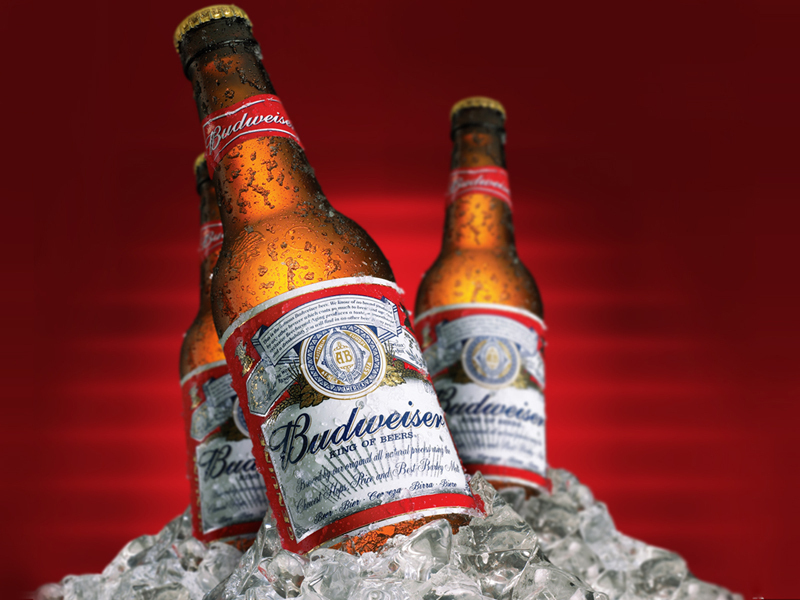
Alcohol advertisements these students found that different shades of black and blue were dominant in advertisements for clear liquors. The reason for this they concluded was that, "Blues evoke a cool, clean, smooth sensation that vodka companies may want to associate with their products". The cool, clean, and smooth drinkability are all traits that appeal to the senses and "evoke" or bring out certain moods and emotions. It is because of these familiar moods and emotions that these companies are able to target what appeals to the audience. This same idea can be seen with certain brands of beer. Rich shades of brown and amber are all colors that are associated with beer. The richness of the colors can be used to display a sort of dense and flavorful theme. Spread throughout are a few examples of hard liquor and beer advertisements, as well as the link to the Stanford case studies. http://www.stanford.edu/class/linguist34/Unit_13/colors.htm


What are some other strategies that advertisers use to make their products more appealing?


Tuesday, February 14, 2012

False Advertising?

      We had just finished discussing the working conditions for employees overseas, and also listening to Mr. Daisey's trip to the "Foxconn" Apple factory in China, when I saw this Droid Razr commercial on television. Before you watch it I would recommend first listening to the shortened version of Mr. Daisey's trip to the "Foxconn" factory here:http://anamericanstudies.posterous.com/mr-daisey-and-the-apple-factory-this-american.


       I am sure that I can speak on behalf of most students in the class that Mr. Daisey's narration of his trip to the Apple "Foxconn" factory truly struck a chord in all of us, and made us think. How are things changing? What are these companies doing to ensure their workers are safe? I was shocked by the conditions these people worked in, and also the fact that hardly any of them had even seen the finished product. This being said, I was disgusted to see this commercial for the new Droid Razr. Clearly staged in China as seen by the opening setting, a small child whispers into a sleek white man's ear. The irony of this opening scene really struck me as ridiculous, because after listening to a stunningly horrid and detailed description of a Chinese technology factory, to paint this false picture of where the phone comes from is absurd. Like action movies we know that this isn't where the phones come from, but it almost mocks how the phones are actually manufactured, and diverts viewers to an all to familiar action adventure. It is also interesting to think about the relationship between worker and consumer as depicted in the commercial, and the actual relationship in real life. In reality the consumer is oblivious to the conditions of the factory and the worker has not even expirienced the final product. In the video, it would seem that the small boy whispers important details about the phone to the consumer showing a close knit relationship.

    This type advertising is definitley not uncommon, especially with products relating to technology. These big mobile phone companies love to pitch the new sleek design and futaristic technology. What they also do in return is paint these false pictures of how the phones are made, and where they come from.

As seen on T.V.                                                                                      Reality


How are these phone companies supposed to advertise their phones if the reality of their origins disgust customers?
Does this fall under the title of false advertising?